How on-site screening is helping smart operators ditch the dump
Across a wide range of civil, utility, drainage, landscaping, and recycling work, a smart investment in a quality screening bucket can markedly improve the cost of materials processing. As with a lot of jobs in life, screening bucket owners know everything’s easier when you’re working with a real good sort.
For many contractors, the value of a screening bucket starts with a few simple questions.
How much is being paid to move material? How much is being paid to dump it? And how much could be saved (or earned) by processing this material on site?
Screening on site clearly answers these questions. Instead of trucking out mixed soil, wet clods, oversize or contaminated material, operators process material at the source and separate what is reusable from what is not.
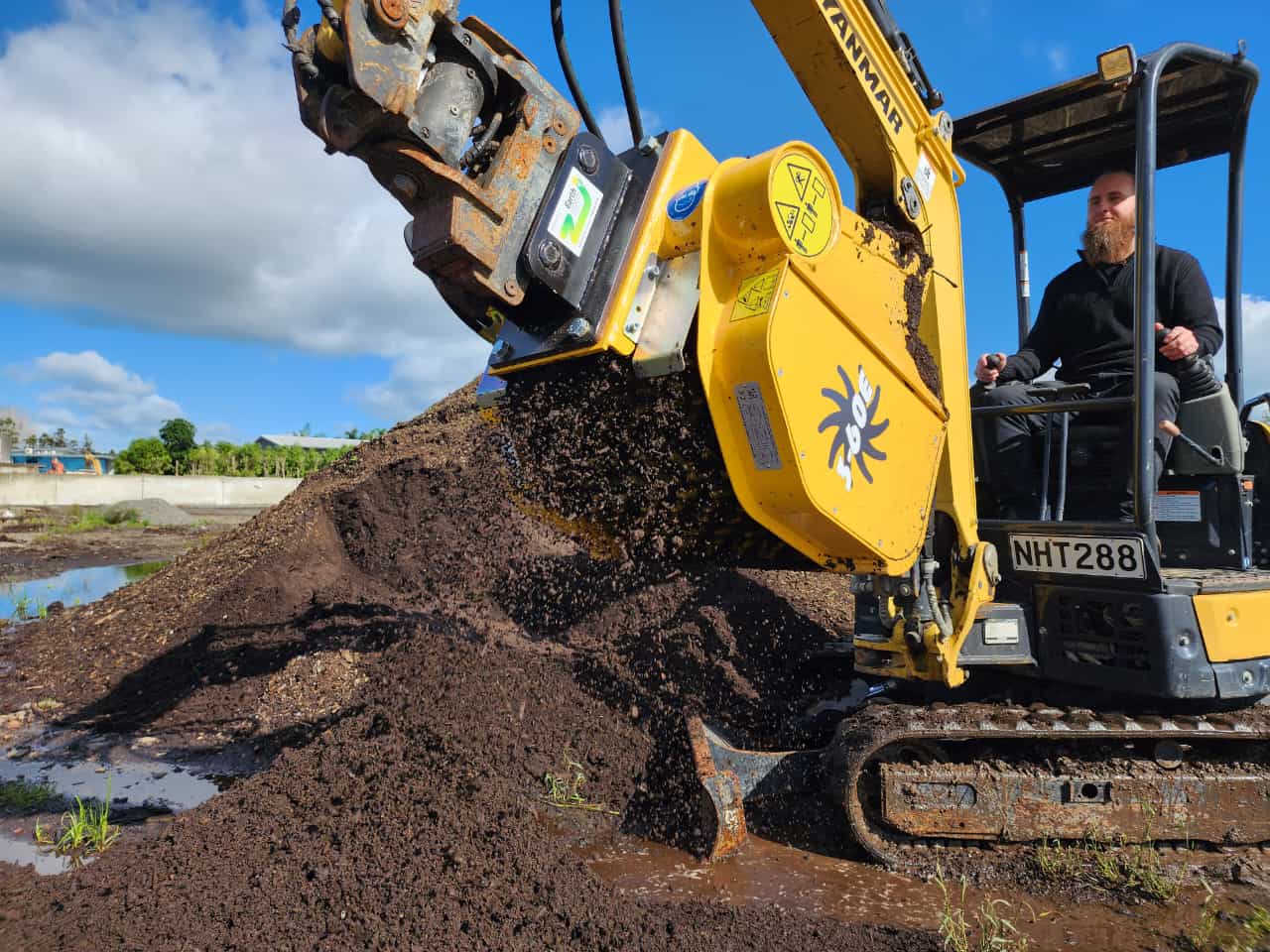
In many jobs that saving can be considerable – especially when reusable material can stay on site or be on-sold as topsoil, bedding, backfill or general fill.
This process can cut a considerable amount of truck movements. With these journeys there are also fuel charges, dumping payments, and additional time and cost lost to repeated loading, haulage and handling. In many jobs that saving can be considerable – especially when reusable material can stay on site or be on-sold as topsoil, bedding, backfill or general fill.
A good screening bucket also offers agility, adaptability, and overall cost-effectiveness when compared to larger operations. These larger conventional approaches can involve an excavator feeding the plant, the plant itself, and a loader shifting or stockpiling product. That’s a lot of machines, operators, fuel charges, servicing costs, and site space to consider.
The screening bucket simplifies everything back to one carrier and one operator, with one machine screening, handling and placing material – even in a compact site. This provides major benefits on smaller sites, remote jobs, trenching work, and urban projects where room is limited.
In a market often drawn to ‘going bigger’, screening buckets are now making a strong case for thinking differently.
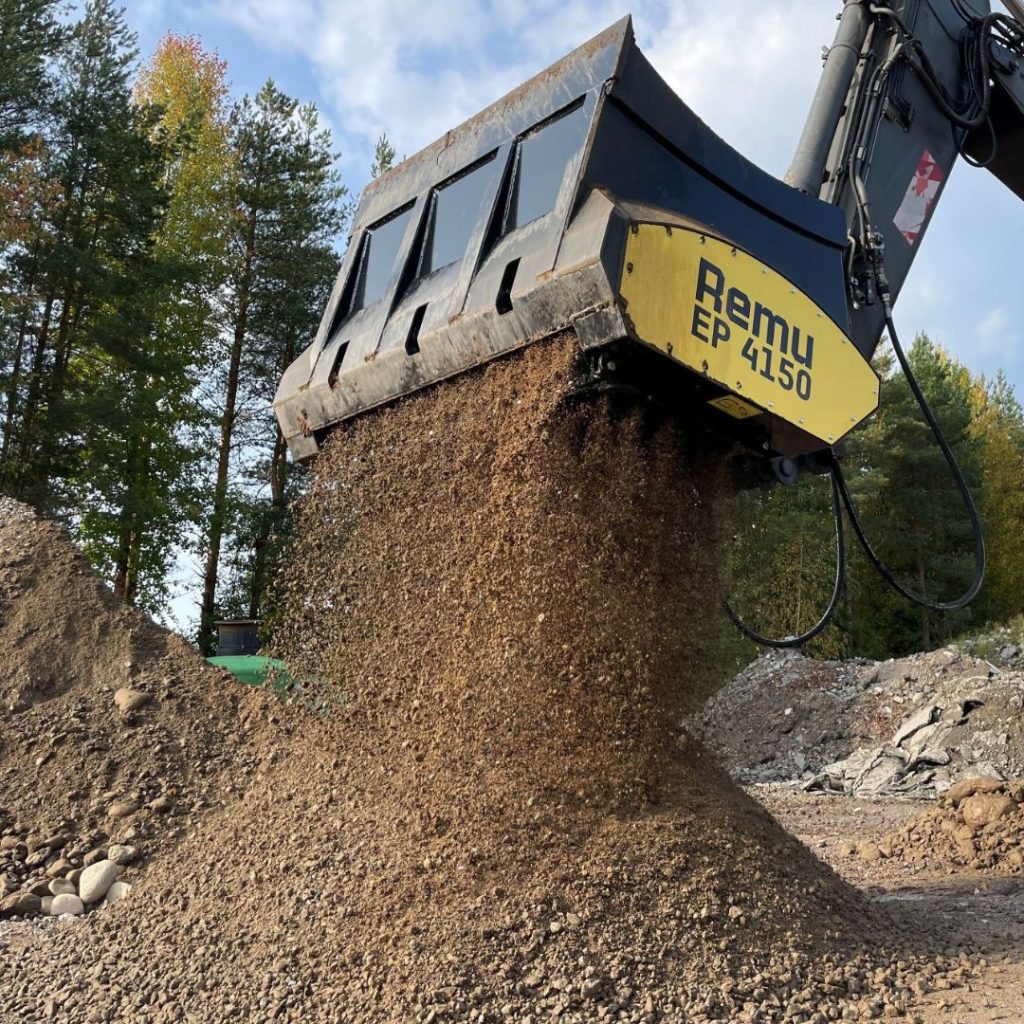
In recent years we have introduced two screening bucket ranges to New Zealand, each with its own distinct strengths and capabilities.
Remu’s heavy-duty rotating blade-style bucket suits tougher, more abrasive work. This makes them ideal for gravel, rock, pipeline padding and demanding backfill applications – the type of work where power and durability matter most. Operators appreciate the optimised bucket mass to volume ratio and hard-wearing spiral rotor design. Interchangeable module options can widen the working range even further, helping one attachment cover more job types.
The Gyru-Star poly-star screening buckets suit those who want fast, clean screening, capable performance in wet material, and very low maintenance. Their wide screening area, sealed bearing design, self-tensioning carbon belt drive and non-shredding screening action make them especially useful where material quality matters.
In a market often drawn to ‘going bigger’, screening buckets are now making a strong case for thinking differently. Mobile, adaptable, and often offering a faster ROI than a larger screening plant, these attachments are paying their way with every turn of the rotors.